Saturday, June 22, 2013
Blood On The Leaves
I guess this is where I talk about Yeezus.
Kanye West is far from the first rapper to sample “Strange Fruit," one of the more haunting and significant songs in American music, but he is by far the most popular. Many of the critics I have read (and I have read dozens of reviews of this album) seem to believe that Kanye should treat the Civil Rights ballad with appropriate reverence, that he should use the sample to make a grand statement about race relations in America. Divorced from context, however, the phrase “black bodies swinging in the summer breeze," can have multiple meanings. Is it distasteful to warp the original meaning of the phrase into a euphemism for sex? Kanye may be oblivious to some things, but he definitely understands the power of “Strange Fruit." In this case, however, his social consciousness gives way to his search for the perfect beat. In “Blood on the Leaves," he might have found it.
Kanye might be the only person in the world who would have thought to combine “Strange Fruit" with TNGHT’s monstrous "R U Ready." The moment at 1:07 when Nina Simone’s piano gives way to TNGHT’s trademark maximalist brass (Chris Ott called them "Inception-horns," which is perfect) is visceral and thrilling. The most mind-blowing single moment in music since…well, I might have to go back to the first time I heard "Maggot Brain." The rest of the track manages to keep up the high, with Kanye’s impassioned autotune matching the beat’s intensity, building to an ecstatic climax as the beat tapers off and the vocals escalate. Even on a a great album full of amazing sounds, the unique cocktail of “Blood on the Leaves" stands out.
I only wish that Kanye would maybe go back and edit his fucking lyrics.
I never pay attention to lyrics for the first several times I listen to a piece of music (unless the music is sparse enough that the lyrics are what stand out). I absorb the rest of the track, pay attention to the drums, the bass, the melody most of all, and the vocals become just another instrument to me. So I spent my first several listens of Yeezus obsessing over the beats, ignoring the words give or take a croissant. I have played Yeezus ten to twenty times since last Friday, and the half-assed lyrics have begun to stand out like a moustache on the Mona Lisa. And I don’t mean classic Kanye’s awkward failed jokes and mispronunciations. Those just add charm, and Yeezus, for all of its strengths, is charmless. I mean lazy and unfinished ideas that he should have fleshed out during the editing process.
"Blood On the Leaves," as many critics have pointed out, could have furthered the grand political themes Kanye expounds upon on “Black Skinheads" and “New Slaves" (the most lyrically focused tracks on the album; also, probably not coincidentally, the songs he performed prior to the album’s 11th hour finish). Or not. It’s his prerogative and he can do whatever he wants with his beat. Kanye chose to talk about relationships; the challenges of being committed to one person while an ex sits across the room, and how that brings back memories of shared intimacies, and you worry that you haven’t shared the same feelings with the person you’re with. You can see the broad strokes; he’s working with complex adult themes here. However, the rushed recording process limits Ye’s ability to express his ideas properly. Instead, Kanye slaps together tired bars about alimony that lack the humor and insight of the last time he rapped about it. On MBDTF, Kanye leveled up lyrically, improving his flow and sharpening his wordplay, with help from his many collaborators and his lengthy recording and editing process. A little bit more time in the studio would have allowed Kanye to focus his thoughts and create a lyrics sheet that could approach the beat tape.
If Kanye spent more time in the studio with these tracks, we likely would have gotten a more polished record, and presumably some of the more questionable lines would have been whittled out. But Yeezus is a record that is more powerful for its frayed edges, and “Blood on the Leaves" is an excellent track despite its lyrical shortcomings. And the beats are fucking dope. I am thrilled with the record Kanye has released, and I will listen to it constantly this Summer, but I can’t help thinking that it could be that much better.
Thursday, January 10, 2013
Reviewing the Hits: 2012
Billboard Number Ones – 2012 Edition: The Meme is the Message
Over the past month I’ve read, watched, or listened to dozens of year-end retrospectives. Best of year lists, entries reflecting on a specific artist or trend, podcast debates about the above, and an especially entertaining March-Madness-style bracket pitting the year’s hits against each other in a fight to the death (dontstoppopthat.com). However, I like to reflect upon the past year through the lens of the old-fashioned, borderline-irrelevant, payola-baiting Billboard Hot 100. (Ok, maybe there’s no more payola, but you can’t convince me that Maroon 5’s nine-week reign was not the result of a vast government conspiracy hellbent on keeping one-time Yankee-hater PSY from reaching the top of the charts; or a unified push by American record companies to forestall the incoming K-Pop invasion). The year’s Billboard Number Ones are not comprehensive and always leave out many songs that the define the year (no Frank Ocean, Fiona Apple or 2 Chainz to see here, folks), but it is always to interesting to see which songs captured our hearts and minds throughout the year.
After the EDM-plus-Adele hellscape that was the year 2011, 2012 comes as a breath of fresh air. The EDM is obviously still around, and the movement fuelled some of the year’s biggest hits (Flo Rida’s “Good Feeling”; Nicki Minaj’s “Starships”; every huge David Guetta song), but the songs that reached number one, rising above the untz-untz crowd, are an impressively varied group of songs. 2012’s number ones ranged from bubblegum pop, to faux Arcade Fire bombast, to full-throated diva belters, to blue-eyed reggae. In 2012, not one but TWO songs heavily influenced by Sting spent significant time at the top of the charts. In 2010 and 2011, the number ones reflected the most played songs at the club. The average number one had a high BPM, a 4/4 beat, and the build-ups and drops associated with club music, designed to make people lose their minds on the dancefloor (the exception being, as always, Adele). Last year, Number ones were, for the most part, quieter and slower, less insistent on us dancing like it was our last night on Earth. The most popular songs of the year were often songs more likely to be played at home alone as in a club. Songs like “Somebody That I Used to Know,” “We Are Young” and “Ho Hey,” the current number 5, would never have sniffed the Top 20 in 2010 or 2011. I’m not sure if the charts changed their methodology or if people changed their listening habits (probably the former), but either way, I love any change that might break us out of our early decade doldrums and into a new exciting period for pop music.
The Hits:
“Sexy and I Know It” – LMFAO: 1/7-1/14 (2 Weeks)
Ugh. I’m gonna skip this one for now. I’ll leave you with this brilliant sketch, and I’ll come back to “Sexy and I Know It” after I throw up in my mouth a little bit.
“We Found Love” – Rihanna ft. Calvin Harris: 11/12/11-12/31/11; 1/21/12-1/28 (10 Weeks)
I already wrote about this one for my 2011 recap. I’ll repost it though:
“THIS is how you do a House crossover. People criticize Rihanna’s vocal ability, but it’s hard to argue that she can’t be compelling in the right context. Rihanna is probably the most prepared of the current pop divas to handle the imminent electronic era in pop music, as her voice complements but never overshadows the production. Considering how simple most of Calvin Harris’s discography is, there’s a surprising level of attention to detail in “We Found Love.” There’s a subtle change in the instrumentation during each verse. I also like how they managed to avoid including a dubstep drop (must have been a struggle). It’s hard to imagine a more effective techno/pop fusion"
8/10
“Sexy and I Know It” – LMFAO: 1/7-1/14 (2 Weeks)
Ok, I’m back. I needed some time to emotionally prepare myself to listen to this song on repeat for this piece. “Sexy and I Know It” is a member of a unique pop music lineage, preceded by such classics as “I’m Too Sexy,” by Right Said Fred, and the gloriously awful “Bad Touch” by the Bloodhound Gang. These are one-joke songs. Isn’t it hilarious how these guys who do not fit even the broadest definition of sexiness are talking about how irresistible they are? “Sexy and I Know It,” by nepotism poster boys LMFAO, manages to be even more disgusting and ridiculous than its predecessors and even less funny. The good news for me is: “Sexy and I Know It” was the year’s worst number one, so there isn’t anywhere to go but up. This would be the worst song to chart in 2012 if it weren’t for the unfortunate “Birthday Cake (Remix),” by Rihanna & Chris Brown.
1/10
“Set Fire to the Rain” – Adele: 2/4-2/11 (2 Weeks)
Adele’s monster 2011 extended into 2012 with “Set Fire to the Rain,” a decent number one that can’t hope to match the iconic status already reached by “Rolling in the Deep” and “Somebody Like You.” “Rolling in the Deep” and “Somebody Like You” featured minimalist arrangements with Adele’s voice as the focal point. Her inflection and vocal timbre provides the drama and the emotion, and because Adele is such an expressive singer, the songs benefit from the spotlight on her vocals. In “Set Fire to the Rain,” her vocals are just as strong, but her performance is swallowed by the epic arrangement. Still, like almost everything else on Adele’s 21, “Set Fire to the Rain” is well-written and well-structured, even if it lacks the emotional oomph of her best songs.
6/10
“Stronger (What Doesn’t Kill You)” – Kelly Clarkson: 2/18-2/25, 3/10
Poor Kelly Clarkson. Every song she releases from here on out will draw comparisons to “Since U Been Gone,” one of the best pop songs of the past 25 years, and every song will suffer from that comparison. It’s hard to fault Kelly for returning to that well, but I think it’s fair to say that I’ve had enough of the Kelly Clarkson empowerment anthem for a while. “Stronger (What Doesn’t Kill You)” is a perfectly competent, catchy track that I have absolutely no need to ever hear again.
5/10
“Part of Me” – Katy Perry: 3/3 (1 week)
According to Wikipedia, Katy Perry’s Dr. Luke/Max Martin-produced kiss-off “Part of Me” was written sometime in 2010, presumably about her ex-boyfriend Travie McCoy of Gym Class Heroes (yep, that clown). It was officially released in February 2012, hot on the heels of Perry’s high-profile divorce from crazy person/comedian Russell Brand. So, the song’s lyrics, though they try to be personal and revealing, are vague enough to apply to two totally different (I assume) relationships. Everything about this song screams, “divorce cash-in.” The chorus is not memorable, especially when compared to her 2010 and 2011 smashes, and the instrumental track is typical Katy Perry, with guitars on the verses, synth on the chorus and huge 4/4 drums. “Part of Me” is the most transient and forgettable of 2012’s number ones, so forgettable, in fact, that she did not even perform “Part of Me” in the concert film bearing its name.
4/10
“We Are Young” – fun. featuring Janelle Monae: 3/17-4/21 (6 Weeks)
“We Are Young” is a mixed bag. It’s a song that feels like it could have been a great song, but it fails for a few reasons. Let’s talk about the good first: That chorus. It’s a great fucking chorus, one of the biggest and catchiest in a year full of big catchy choruses, with Nate Ruess’s voice soaring over Graduation-era Kanye synths and plinking piano. The bridge is pretty good, too, and would be better if Janelle Monae’s part was not buried under layers of harmony. I’ve heard people compare fun. to Queen, their chanted harmonies always reminded me more of the Lion King soundtrack, which is good, cause I like The Lion King more than I like Queen.
Now the bad: The first verses is dreadful. The lyrics are so self-important and read like entry-level poetry (“Getting higher than the Empire State”), and the melody uninspired. Worst of all, it does not fit at all with the chorus. More talented people than fun. have created great songs by mashing up two half-written songs, but here it feels like the chorus teleported in from some other, more interesting song.
Overall, the very good chorus and bridge comprise most of the song, but the terrible first verse and the awkward transition between verse and chorus (not to mention the sheer grammatical difficulty of writing about fun. on Microsoft Word) prevent me from giving “We Are Young” anything higher than a 6.
6/10
“Somebody That I Used to Know” – Gotye ft. Kimbra; 4/28-6/16 (8 Weeks)
When you think about it, Gotye’s “Somebody That I Used to Know” is probably the most left-field of 2012’s left-field hits. It rose to the top of the charts based almost entirely on word of mouth, without the aid of Bieber plugs, Chevy commercials or Internet meme machines. Just a great song with a great video reaching number one the old fashioned way. “Somebody That I Used to Know” is an effective break-up ballad, remorseful without being self-flagellating or vindictive. Aided only by acoustic guitar, xylophone and some nifty (read: not overpowering or melodramatic) synths, Gotye quietly and sadly confesses the ways that he and his ex were wrong for each other during the verse, resolving to put the past behind him. The chorus finds Gotye in with an anguished Sting-inspired yelp, lashing out at the girl for shutting him out of her life. The key to the song is Kimbra’s bridge, which turns the song on its head, revealing Gotye’s character to be, for lack of a better phrase, a total douche. “Somebody That I Used to Know” is based on real human emotions, and not the type of oversized pop song emotions found in “Stronger,” “We Are Never Ever Getting Back Together” or even “We Are Young,” and sure, it was overplayed, but I’m ecstatic that a song like this can find such traction on the radio and on the pop charts.
8/10
“Call Me Maybe” – Carly Rae Jepsen; 6/23-8/18 (9 Weeks)
When I was in Elementary School, I had a crush on a girl named Caroline (not her real name). I didn’t know what to do with myself. I liked a girl? Girls, to any grade school boy, are icky! So, I convinced myself that I didn’t like Caroline, but that I hated Caroline. I would taunt her mercilessly, make fun of her to my friends and loudly proclaim how much I hated her. The obvious truth was that I was lying to myself to avoid embarrassment about how I really felt.
I had a similar relationship to “Call Me Maybe,” albeit on a slightly more unconscious level. I first heard “Call Me Maybe” in early February 2012. My kneejerk reaction was to hate the fuck out of this song, mostly because my first exposure to the song came from the mouths of drunken sorority girls, before I ever heard the phrase Carly Rae Jepsen and I heard that it was vaguely related to Bieber. Drunken sorority girls are the reason why we have Spice Girls reunions, “Party in the USA,” and Ke$ha (who got a little better, but still). They do not have a very good track record (girls are icky, right?). When I finally heard the song at a bar, I began to understand the song in context, and even to appreciate the saccharine strings and the singer’s playful vocal stylings (“AND all the OTHER boys,” word to Howard Kremer, it was a Jepsen Summah). After that, I just could not abide the sheer catchiness of the whole thing. “Call Me Maybe” is one of those songs where just reading the name of the song in an article is enough to lodge the melody into your cerebral cortex for weeks on end. Soon enough, I was singing “BEFORE YOU CAME INTO MY LIFE I MISSED YOU SO BAD!” to myself in the shower. The melody had broken through my fierce resistance and invaded my subconscious. Around St. Patrick’s Day, I realized that “Call Me Maybe” was a fantastic pop song and claiming that I didn’t like it would be akin to claiming, “I don’t like candy, it’s too damn sweet.” Not to mention that the song would be inextricably linked to my senior year of college, and all the good memories therein. So I finally gave in. (Mind you, this all happened back in March, months before “Call Me Maybe” even reached the top of the charts. “Call Me Maybe” had an unnaturally long lifespan, probably because it’s fucking amazing). Before it came into my life, I missed it so bad, and what not.
9/10
FUCK IT!
10/10
“Whistle”– Flo Rida; 8/25, 9/15 (2 Weeks)
I’m tempted just to write “It’s a Flo Rida song,” rate it and call it a day. They’re all the same. Flo Rida is a rapper with no discernable personality. Though he’s technically proficient as a rapper, he never says anything memorable and his verses are just there to fill time between the hooks. “Whistle,” is no different. Flo Rida had three monster hits this year, and of the three, “Whistle” has by far the least memorable hook and least interesting production, yet it’s the one that reached number one. “Whistle” is relatively harmless, but if he’s talking about his dick, then dock 2 points from my rating (ick). I’ll give him the benefit of the doubt, even though I probably shouldn’t.
4/10
“We Are Never Ever Getting Back Together” – Taylor Swift; 9/1-9/8; 9/22 (3 Weeks)
Step One: Take Taylor’s personality and ability to inject her personal life into her songs.
Step Two: Combine Step One with Max Martin’s ability to craft a massive pop hook
Step Three: PROFIT!
It took longer than most people expected, but in 2012, Taylor Swift unequivocally became the biggest pop star in the world. “We Are Never Ever Getting Back Together,” the Max Martin produced smash engineered to drive her rise to the top, was the lead single from Red, the biggest album of the year, and one of four songs to reach the top ten from that album.
Though I’ve liked Taylor Swift in the past, I have never bought her as the shy girl who guys would dump for somebody hotter. “We Are Never Getting Back Together” finds her ditching that persona and embracing mean-girlhood. In this song she becomes, as Walter White would say, the One Who Dumps (get your goddamn mind out of the gutter, you disgusting person). “We Are Never Ever Getting Back Together” also finds Taylor abandoning her country roots (sure there are some acoustic guitar arpeggios, but they are more than likely synthesized) and aiming for pure pop. Though “You Belong With Me,” remains the perfect Taylor Swift song in my eyes, but “We Are Never Ever Getting Back Together” is very good, with a likable spoken word bridge (love her inflection on “this is exHAUsting”) and some legitimate burns (the indie rock record that’s way cooler than hers) thrown in for good measure. Suck on it, Jake Gyllenhaal. You are officially the 2012 equivalent to Adele’s deadbeat window washer ex-boyfriend.
7/10
“One More Night” – Maroon 5; 9/29-11/24 (9 Weeks)
Way back in the intro (Congrats if you’ve made it this far! I’m almost done.), I alluded to a government-sponsored cabal devoted to preventing “Gangnam Style” from reaching the top of the charts. Now, I have no proof of this, but what else could possibly explain the nine-week reign of this Ace of Base rip by Maroon 1 Plus Four? “Gangnam Style” sat behind “One More Night” at the number two spot for seven straight weeks. “One More Night” was certainly popular, but popular enough to merit a nine-week reign on the top of the charts? I think not! I’m honestly not even the biggest fan of “Gangnam Style,” but there’s no denying that it had a cultural impact equal to, if not greater than, any of the number ones on the list. As for “One More Night”? I’m sure Adam Levine performed it on The Voice or something.
Ok, I realize I haven’t said anything about the song. I haven’t said anything about vanilla ice cream or white bread either. Why? Because those things are BORING! Just like “One More Night,” a slice of blue-eyed Reggae designed to provide background atmosphere for department stores. Say what you will about “Gangnam Style,” but at least it would have been fun to write about.
5/10
“Diamonds” – Rihanna; 12/1-12/15 (3 Weeks)
“Diamonds” was co-written by Sia, and you can really tell in the way that Rihanna sings it. The vocal melody would work very well for Sia, but in “Diamonds” it really just highlights the relative weakness of Rihanna’s voice, as she awkwardly wobbles between high and low notes. I enjoy plenty of Rihanna songs, but the best of them do not rely on her ability to deliver a brilliant vocal performance, but on her ability to sell a hook. There’s clearly a strong hook on “Diamonds,” but it is far too repetitive for my taste and her melodramatic vocals overload the already considerable bombast of the Stargate produced track. The chord progression was promising, but this track needed a stronger singer than Rihanna to do justice to the production and bring the melody to life.
4/10
“Locked Out of Heaven” – Bruno Mars; 12/22-present (5 Weeks…SO FAR!)
We all know that Sting is having a moment right now (see: Gotye), but I think it would be unfair to call out Bruno Mars for trend-hopping on this one. “Locked Out of Heaven” was probably written before anyone at Bruno Mars’ label knew that “Somebody That I Used to Know” was going to be a smash, but there’s no doubt in my mind that the success of that record directly led to the release of this one. That’s just some smart A&R work. Gotye’s track resembles the quiet bombast of Sting’s solo career, but “Locked Out of Heaven” is a direct descendent of early Police smashes like “Roxanne,” “So Lonely” and “Message in a Bottle.” I love all three of those songs, and I commend Bruno Mars for bringing back the spirit of those great records, but he almost ruins that classic sound by bringing some trademark-Mars squickiness to the proceedings (Can we please have a moratorium on people singing “your sex”? Is there any creepier phrase than that? I mean, besides Flo Rida telling everybody to blow on his dick whistle?). Remember, this is the guy behind two of the absolute worst songs of 2011 (his own “The Lazy Song,” and Bad-Meets-Evil’s execrable “Lighters). Still, “Locked Out of Heaven” is a solid pop song, with a great “yeah yeah yeah” hook, and the pleasure I get from hearing a reasonable facsimile of the best Police songs on Z100 counteracts some of that creep factor (not to mention that plenty of Police songs have lyrics that are just as creepy).
6/10
In Summation: 2012 was a decent-to-good year for number one singles. Any year featuring “Call Me Maybe” can’t be too bad. As good a year 2012 was for pop music and music in general, it felt like a table-setting year. The 2010s are in the process of developing a unique aesthetic for itself, and 2012 was a clear step away from the late 2000s style. I, for one, welcome our new era in pop music, especially if that new era features much less LMFAO. See you next year.
Over the past month I’ve read, watched, or listened to dozens of year-end retrospectives. Best of year lists, entries reflecting on a specific artist or trend, podcast debates about the above, and an especially entertaining March-Madness-style bracket pitting the year’s hits against each other in a fight to the death (dontstoppopthat.com). However, I like to reflect upon the past year through the lens of the old-fashioned, borderline-irrelevant, payola-baiting Billboard Hot 100. (Ok, maybe there’s no more payola, but you can’t convince me that Maroon 5’s nine-week reign was not the result of a vast government conspiracy hellbent on keeping one-time Yankee-hater PSY from reaching the top of the charts; or a unified push by American record companies to forestall the incoming K-Pop invasion). The year’s Billboard Number Ones are not comprehensive and always leave out many songs that the define the year (no Frank Ocean, Fiona Apple or 2 Chainz to see here, folks), but it is always to interesting to see which songs captured our hearts and minds throughout the year.
After the EDM-plus-Adele hellscape that was the year 2011, 2012 comes as a breath of fresh air. The EDM is obviously still around, and the movement fuelled some of the year’s biggest hits (Flo Rida’s “Good Feeling”; Nicki Minaj’s “Starships”; every huge David Guetta song), but the songs that reached number one, rising above the untz-untz crowd, are an impressively varied group of songs. 2012’s number ones ranged from bubblegum pop, to faux Arcade Fire bombast, to full-throated diva belters, to blue-eyed reggae. In 2012, not one but TWO songs heavily influenced by Sting spent significant time at the top of the charts. In 2010 and 2011, the number ones reflected the most played songs at the club. The average number one had a high BPM, a 4/4 beat, and the build-ups and drops associated with club music, designed to make people lose their minds on the dancefloor (the exception being, as always, Adele). Last year, Number ones were, for the most part, quieter and slower, less insistent on us dancing like it was our last night on Earth. The most popular songs of the year were often songs more likely to be played at home alone as in a club. Songs like “Somebody That I Used to Know,” “We Are Young” and “Ho Hey,” the current number 5, would never have sniffed the Top 20 in 2010 or 2011. I’m not sure if the charts changed their methodology or if people changed their listening habits (probably the former), but either way, I love any change that might break us out of our early decade doldrums and into a new exciting period for pop music.
The Hits:
“Sexy and I Know It” – LMFAO: 1/7-1/14 (2 Weeks)
Ugh. I’m gonna skip this one for now. I’ll leave you with this brilliant sketch, and I’ll come back to “Sexy and I Know It” after I throw up in my mouth a little bit.
“We Found Love” – Rihanna ft. Calvin Harris: 11/12/11-12/31/11; 1/21/12-1/28 (10 Weeks)
I already wrote about this one for my 2011 recap. I’ll repost it though:
“THIS is how you do a House crossover. People criticize Rihanna’s vocal ability, but it’s hard to argue that she can’t be compelling in the right context. Rihanna is probably the most prepared of the current pop divas to handle the imminent electronic era in pop music, as her voice complements but never overshadows the production. Considering how simple most of Calvin Harris’s discography is, there’s a surprising level of attention to detail in “We Found Love.” There’s a subtle change in the instrumentation during each verse. I also like how they managed to avoid including a dubstep drop (must have been a struggle). It’s hard to imagine a more effective techno/pop fusion"
8/10
“Sexy and I Know It” – LMFAO: 1/7-1/14 (2 Weeks)
Ok, I’m back. I needed some time to emotionally prepare myself to listen to this song on repeat for this piece. “Sexy and I Know It” is a member of a unique pop music lineage, preceded by such classics as “I’m Too Sexy,” by Right Said Fred, and the gloriously awful “Bad Touch” by the Bloodhound Gang. These are one-joke songs. Isn’t it hilarious how these guys who do not fit even the broadest definition of sexiness are talking about how irresistible they are? “Sexy and I Know It,” by nepotism poster boys LMFAO, manages to be even more disgusting and ridiculous than its predecessors and even less funny. The good news for me is: “Sexy and I Know It” was the year’s worst number one, so there isn’t anywhere to go but up. This would be the worst song to chart in 2012 if it weren’t for the unfortunate “Birthday Cake (Remix),” by Rihanna & Chris Brown.
1/10
“Set Fire to the Rain” – Adele: 2/4-2/11 (2 Weeks)
Adele’s monster 2011 extended into 2012 with “Set Fire to the Rain,” a decent number one that can’t hope to match the iconic status already reached by “Rolling in the Deep” and “Somebody Like You.” “Rolling in the Deep” and “Somebody Like You” featured minimalist arrangements with Adele’s voice as the focal point. Her inflection and vocal timbre provides the drama and the emotion, and because Adele is such an expressive singer, the songs benefit from the spotlight on her vocals. In “Set Fire to the Rain,” her vocals are just as strong, but her performance is swallowed by the epic arrangement. Still, like almost everything else on Adele’s 21, “Set Fire to the Rain” is well-written and well-structured, even if it lacks the emotional oomph of her best songs.
6/10
“Stronger (What Doesn’t Kill You)” – Kelly Clarkson: 2/18-2/25, 3/10
Poor Kelly Clarkson. Every song she releases from here on out will draw comparisons to “Since U Been Gone,” one of the best pop songs of the past 25 years, and every song will suffer from that comparison. It’s hard to fault Kelly for returning to that well, but I think it’s fair to say that I’ve had enough of the Kelly Clarkson empowerment anthem for a while. “Stronger (What Doesn’t Kill You)” is a perfectly competent, catchy track that I have absolutely no need to ever hear again.
5/10
“Part of Me” – Katy Perry: 3/3 (1 week)
According to Wikipedia, Katy Perry’s Dr. Luke/Max Martin-produced kiss-off “Part of Me” was written sometime in 2010, presumably about her ex-boyfriend Travie McCoy of Gym Class Heroes (yep, that clown). It was officially released in February 2012, hot on the heels of Perry’s high-profile divorce from crazy person/comedian Russell Brand. So, the song’s lyrics, though they try to be personal and revealing, are vague enough to apply to two totally different (I assume) relationships. Everything about this song screams, “divorce cash-in.” The chorus is not memorable, especially when compared to her 2010 and 2011 smashes, and the instrumental track is typical Katy Perry, with guitars on the verses, synth on the chorus and huge 4/4 drums. “Part of Me” is the most transient and forgettable of 2012’s number ones, so forgettable, in fact, that she did not even perform “Part of Me” in the concert film bearing its name.
4/10
“We Are Young” – fun. featuring Janelle Monae: 3/17-4/21 (6 Weeks)
“We Are Young” is a mixed bag. It’s a song that feels like it could have been a great song, but it fails for a few reasons. Let’s talk about the good first: That chorus. It’s a great fucking chorus, one of the biggest and catchiest in a year full of big catchy choruses, with Nate Ruess’s voice soaring over Graduation-era Kanye synths and plinking piano. The bridge is pretty good, too, and would be better if Janelle Monae’s part was not buried under layers of harmony. I’ve heard people compare fun. to Queen, their chanted harmonies always reminded me more of the Lion King soundtrack, which is good, cause I like The Lion King more than I like Queen.
Now the bad: The first verses is dreadful. The lyrics are so self-important and read like entry-level poetry (“Getting higher than the Empire State”), and the melody uninspired. Worst of all, it does not fit at all with the chorus. More talented people than fun. have created great songs by mashing up two half-written songs, but here it feels like the chorus teleported in from some other, more interesting song.
Overall, the very good chorus and bridge comprise most of the song, but the terrible first verse and the awkward transition between verse and chorus (not to mention the sheer grammatical difficulty of writing about fun. on Microsoft Word) prevent me from giving “We Are Young” anything higher than a 6.
6/10
“Somebody That I Used to Know” – Gotye ft. Kimbra; 4/28-6/16 (8 Weeks)
When you think about it, Gotye’s “Somebody That I Used to Know” is probably the most left-field of 2012’s left-field hits. It rose to the top of the charts based almost entirely on word of mouth, without the aid of Bieber plugs, Chevy commercials or Internet meme machines. Just a great song with a great video reaching number one the old fashioned way. “Somebody That I Used to Know” is an effective break-up ballad, remorseful without being self-flagellating or vindictive. Aided only by acoustic guitar, xylophone and some nifty (read: not overpowering or melodramatic) synths, Gotye quietly and sadly confesses the ways that he and his ex were wrong for each other during the verse, resolving to put the past behind him. The chorus finds Gotye in with an anguished Sting-inspired yelp, lashing out at the girl for shutting him out of her life. The key to the song is Kimbra’s bridge, which turns the song on its head, revealing Gotye’s character to be, for lack of a better phrase, a total douche. “Somebody That I Used to Know” is based on real human emotions, and not the type of oversized pop song emotions found in “Stronger,” “We Are Never Ever Getting Back Together” or even “We Are Young,” and sure, it was overplayed, but I’m ecstatic that a song like this can find such traction on the radio and on the pop charts.
8/10
“Call Me Maybe” – Carly Rae Jepsen; 6/23-8/18 (9 Weeks)
When I was in Elementary School, I had a crush on a girl named Caroline (not her real name). I didn’t know what to do with myself. I liked a girl? Girls, to any grade school boy, are icky! So, I convinced myself that I didn’t like Caroline, but that I hated Caroline. I would taunt her mercilessly, make fun of her to my friends and loudly proclaim how much I hated her. The obvious truth was that I was lying to myself to avoid embarrassment about how I really felt.
I had a similar relationship to “Call Me Maybe,” albeit on a slightly more unconscious level. I first heard “Call Me Maybe” in early February 2012. My kneejerk reaction was to hate the fuck out of this song, mostly because my first exposure to the song came from the mouths of drunken sorority girls, before I ever heard the phrase Carly Rae Jepsen and I heard that it was vaguely related to Bieber. Drunken sorority girls are the reason why we have Spice Girls reunions, “Party in the USA,” and Ke$ha (who got a little better, but still). They do not have a very good track record (girls are icky, right?). When I finally heard the song at a bar, I began to understand the song in context, and even to appreciate the saccharine strings and the singer’s playful vocal stylings (“AND all the OTHER boys,” word to Howard Kremer, it was a Jepsen Summah). After that, I just could not abide the sheer catchiness of the whole thing. “Call Me Maybe” is one of those songs where just reading the name of the song in an article is enough to lodge the melody into your cerebral cortex for weeks on end. Soon enough, I was singing “BEFORE YOU CAME INTO MY LIFE I MISSED YOU SO BAD!” to myself in the shower. The melody had broken through my fierce resistance and invaded my subconscious. Around St. Patrick’s Day, I realized that “Call Me Maybe” was a fantastic pop song and claiming that I didn’t like it would be akin to claiming, “I don’t like candy, it’s too damn sweet.” Not to mention that the song would be inextricably linked to my senior year of college, and all the good memories therein. So I finally gave in. (Mind you, this all happened back in March, months before “Call Me Maybe” even reached the top of the charts. “Call Me Maybe” had an unnaturally long lifespan, probably because it’s fucking amazing). Before it came into my life, I missed it so bad, and what not.
9/10
FUCK IT!
10/10
“Whistle”– Flo Rida; 8/25, 9/15 (2 Weeks)
I’m tempted just to write “It’s a Flo Rida song,” rate it and call it a day. They’re all the same. Flo Rida is a rapper with no discernable personality. Though he’s technically proficient as a rapper, he never says anything memorable and his verses are just there to fill time between the hooks. “Whistle,” is no different. Flo Rida had three monster hits this year, and of the three, “Whistle” has by far the least memorable hook and least interesting production, yet it’s the one that reached number one. “Whistle” is relatively harmless, but if he’s talking about his dick, then dock 2 points from my rating (ick). I’ll give him the benefit of the doubt, even though I probably shouldn’t.
4/10
“We Are Never Ever Getting Back Together” – Taylor Swift; 9/1-9/8; 9/22 (3 Weeks)
Step One: Take Taylor’s personality and ability to inject her personal life into her songs.
Step Two: Combine Step One with Max Martin’s ability to craft a massive pop hook
Step Three: PROFIT!
It took longer than most people expected, but in 2012, Taylor Swift unequivocally became the biggest pop star in the world. “We Are Never Ever Getting Back Together,” the Max Martin produced smash engineered to drive her rise to the top, was the lead single from Red, the biggest album of the year, and one of four songs to reach the top ten from that album.
Though I’ve liked Taylor Swift in the past, I have never bought her as the shy girl who guys would dump for somebody hotter. “We Are Never Getting Back Together” finds her ditching that persona and embracing mean-girlhood. In this song she becomes, as Walter White would say, the One Who Dumps (get your goddamn mind out of the gutter, you disgusting person). “We Are Never Ever Getting Back Together” also finds Taylor abandoning her country roots (sure there are some acoustic guitar arpeggios, but they are more than likely synthesized) and aiming for pure pop. Though “You Belong With Me,” remains the perfect Taylor Swift song in my eyes, but “We Are Never Ever Getting Back Together” is very good, with a likable spoken word bridge (love her inflection on “this is exHAUsting”) and some legitimate burns (the indie rock record that’s way cooler than hers) thrown in for good measure. Suck on it, Jake Gyllenhaal. You are officially the 2012 equivalent to Adele’s deadbeat window washer ex-boyfriend.
7/10
“One More Night” – Maroon 5; 9/29-11/24 (9 Weeks)
Way back in the intro (Congrats if you’ve made it this far! I’m almost done.), I alluded to a government-sponsored cabal devoted to preventing “Gangnam Style” from reaching the top of the charts. Now, I have no proof of this, but what else could possibly explain the nine-week reign of this Ace of Base rip by Maroon 1 Plus Four? “Gangnam Style” sat behind “One More Night” at the number two spot for seven straight weeks. “One More Night” was certainly popular, but popular enough to merit a nine-week reign on the top of the charts? I think not! I’m honestly not even the biggest fan of “Gangnam Style,” but there’s no denying that it had a cultural impact equal to, if not greater than, any of the number ones on the list. As for “One More Night”? I’m sure Adam Levine performed it on The Voice or something.
Ok, I realize I haven’t said anything about the song. I haven’t said anything about vanilla ice cream or white bread either. Why? Because those things are BORING! Just like “One More Night,” a slice of blue-eyed Reggae designed to provide background atmosphere for department stores. Say what you will about “Gangnam Style,” but at least it would have been fun to write about.
5/10
“Diamonds” – Rihanna; 12/1-12/15 (3 Weeks)
“Diamonds” was co-written by Sia, and you can really tell in the way that Rihanna sings it. The vocal melody would work very well for Sia, but in “Diamonds” it really just highlights the relative weakness of Rihanna’s voice, as she awkwardly wobbles between high and low notes. I enjoy plenty of Rihanna songs, but the best of them do not rely on her ability to deliver a brilliant vocal performance, but on her ability to sell a hook. There’s clearly a strong hook on “Diamonds,” but it is far too repetitive for my taste and her melodramatic vocals overload the already considerable bombast of the Stargate produced track. The chord progression was promising, but this track needed a stronger singer than Rihanna to do justice to the production and bring the melody to life.
4/10
“Locked Out of Heaven” – Bruno Mars; 12/22-present (5 Weeks…SO FAR!)
We all know that Sting is having a moment right now (see: Gotye), but I think it would be unfair to call out Bruno Mars for trend-hopping on this one. “Locked Out of Heaven” was probably written before anyone at Bruno Mars’ label knew that “Somebody That I Used to Know” was going to be a smash, but there’s no doubt in my mind that the success of that record directly led to the release of this one. That’s just some smart A&R work. Gotye’s track resembles the quiet bombast of Sting’s solo career, but “Locked Out of Heaven” is a direct descendent of early Police smashes like “Roxanne,” “So Lonely” and “Message in a Bottle.” I love all three of those songs, and I commend Bruno Mars for bringing back the spirit of those great records, but he almost ruins that classic sound by bringing some trademark-Mars squickiness to the proceedings (Can we please have a moratorium on people singing “your sex”? Is there any creepier phrase than that? I mean, besides Flo Rida telling everybody to blow on his dick whistle?). Remember, this is the guy behind two of the absolute worst songs of 2011 (his own “The Lazy Song,” and Bad-Meets-Evil’s execrable “Lighters). Still, “Locked Out of Heaven” is a solid pop song, with a great “yeah yeah yeah” hook, and the pleasure I get from hearing a reasonable facsimile of the best Police songs on Z100 counteracts some of that creep factor (not to mention that plenty of Police songs have lyrics that are just as creepy).
6/10
In Summation: 2012 was a decent-to-good year for number one singles. Any year featuring “Call Me Maybe” can’t be too bad. As good a year 2012 was for pop music and music in general, it felt like a table-setting year. The 2010s are in the process of developing a unique aesthetic for itself, and 2012 was a clear step away from the late 2000s style. I, for one, welcome our new era in pop music, especially if that new era features much less LMFAO. See you next year.
Tuesday, September 25, 2012
Origin Stories: Full Mix
Here's the full playlist, and here's a Spotify Link so you can listen to it if you please.
1). Man In Black — Johnny Cash
2). My Back Pages — Bob Dylan
3). Tenth Avenue Freeze-Out — Bruce Springsteen and the E Street Band
4). They Might Be Giants — They Might Be Giants
5). Clash City Rockers — The Clash
6). Formed A Band — Art Brut
7). History Lesson Part 2 — Minutemen
8). I Was Born A Unicorn — The Unicorns
9). Born on the Bayou — Creedence Clearwater Revival
10). Trailer Trash — Modest Mouse
11). Underground — Tom Waits
12). Jocko Homo — Devo
13). Ziggy Stardust — David Bowie
14). Gets Rich — The Dismemberment Plan
15). My Name Is — Eminem
16). Juicy — The Notorious B.I.G.
17). Through the Wire — Kanye West
18). My 1st Song — Jay-Z
19). Fetus — Nas
Origin Stories Mix Part 3
15). My Name Is — EminemAt once a master of internal rhyme and toilet humor, Eminem introduced himself to the American public with “My Name Is,” a song, I would venture to say, most males of a certain age memorized front to back. Everything that would define Shady’s most fertile period is here: mommy issues, drug addiction, cheesy sound effects, Dr. Dre and mean-spirited, but often clever, digs at celebrities. Glimpses of Marshall Mathers peek through the cartoon he projects (“I just found out my mom does more dope than I do”), but Eminem’s main goal was to poke fun at the establishment, piss off some squares and become a hero for troubled youth. Now that Eminem is recording tracks with Bruno fucking Mars, it’s hard to remember how shocking and intriguing he was when he burst onto the scene.
16). Juicy — The Notorious B.I.G.
The ultimate Hip-Hop origin song, and the forefather of thousands of subsequent “I made it” anthems. In the first verse, Biggie radiates his love for the music and marvels at the surrealistic idea of being paid huge money for rhyming. In other hands, all this bragging about ends could get obnoxious, but Biggie roots every line in the past, emphasizing the struggle he once faced before he broke into the rap game. Since we understand where Christopher Wallace comes from, we don’t begrudge him his success and we get why he chooses to live a life of extraordinary luxury. Besides all that, “Juicy” is filled to the brim with great lines (“birthdays was the worst days, now we sip champagne when we thirsty”; “Super Nintendo, Sega Genesis, when I was flat broke shit I couldn’t picture this”) and a high-class beat, with a bouncy sing-along bassline. And it’s all good, baby baby.
17). Through the Wire — Kanye WestThough Kanye would go into greater detail about the start of his career in “Last Call,” “Through the Wire” was an early display of Kanye’s skill for spinning tales from his personal life into compelling tracks. Kanye’s car crash was a formative incident on his artistic persona, especially in his early days, which helped him seem grateful, not just for his opportunity to become a rap star but for his life. This is probably the only track where Kanye seems (gasp!) humble. There were songs on The College Dropout that were more radio ready (“Slow Jamz,” “All Falls Down”) but Kanye released “Through the Wire” as his first single, possibly because he felt it best represented him as an artist.
18). My 1st Song — Jay-Z
My 1st Song,” is the last song on what was supposed to be, but nobody actually thought would be, Jay’s last album. The other Hip-Hop origin stories on the playlist are introductions, opening salvos that try to show the world what the artist is made of. “My 1st Song” is a retrospective, spanning the whole of his career in two verses and a drawn out shout out to all those who helped Jay on his way to the top. The first verse mines the same familiar subject as “Juicy” and millions of other Hip-Hop tracks: he started out with nothing, started selling drugs, etc. The second verse is about the necessity of maintaining a high level of passion and intensity for your rhymes throughout your career. Did Jay-Z retire because he didn’t believe he was capable of keeping up his high standard? The world will never know, because he came out with the sub-standard Kingdom Come two years later.
19). Fetus — Nas“Fetus” wins the award for traveling the furthest back into the life of the artist. It begins with Nas’s conception and ends with his birth, as he raps from the perspective of an unborn fetus. “Fetus” is thrillingly realized, if self-aggrandizing, with fascinating, disturbing images of womb life and a window into his parents’ marriage. Most rappers would not be able to sustain the pre-birth gimmick for an entire song without making it seem overly-sentimental or cheesy. What makes “Fetus” such a great origin song is that Nas finds a way to use the gimmick to give the listener a deeper understanding of the man as an artist and as a person.
17). Through the Wire — Kanye WestThough Kanye would go into greater detail about the start of his career in “Last Call,” “Through the Wire” was an early display of Kanye’s skill for spinning tales from his personal life into compelling tracks. Kanye’s car crash was a formative incident on his artistic persona, especially in his early days, which helped him seem grateful, not just for his opportunity to become a rap star but for his life. This is probably the only track where Kanye seems (gasp!) humble. There were songs on The College Dropout that were more radio ready (“Slow Jamz,” “All Falls Down”) but Kanye released “Through the Wire” as his first single, possibly because he felt it best represented him as an artist.
18). My 1st Song — Jay-Z
My 1st Song,” is the last song on what was supposed to be, but nobody actually thought would be, Jay’s last album. The other Hip-Hop origin stories on the playlist are introductions, opening salvos that try to show the world what the artist is made of. “My 1st Song” is a retrospective, spanning the whole of his career in two verses and a drawn out shout out to all those who helped Jay on his way to the top. The first verse mines the same familiar subject as “Juicy” and millions of other Hip-Hop tracks: he started out with nothing, started selling drugs, etc. The second verse is about the necessity of maintaining a high level of passion and intensity for your rhymes throughout your career. Did Jay-Z retire because he didn’t believe he was capable of keeping up his high standard? The world will never know, because he came out with the sub-standard Kingdom Come two years later.
19). Fetus — Nas“Fetus” wins the award for traveling the furthest back into the life of the artist. It begins with Nas’s conception and ends with his birth, as he raps from the perspective of an unborn fetus. “Fetus” is thrillingly realized, if self-aggrandizing, with fascinating, disturbing images of womb life and a window into his parents’ marriage. Most rappers would not be able to sustain the pre-birth gimmick for an entire song without making it seem overly-sentimental or cheesy. What makes “Fetus” such a great origin song is that Nas finds a way to use the gimmick to give the listener a deeper understanding of the man as an artist and as a person.
Origin Story Mix Part 2
10). Trailer Trash — Modest MouseIsaac Brock’s lyrics are often enigmatic, leaving it up to the listener to piece together what he’s talking about. To me, “Trailer Trash” paints a picture of Brock’s chaotic upbringing in the Pacific Northwest (“eating snowflakes with plastic forks” in “trailers with no class”) and illustrates the struggle of pursuing your dreams in a depressed, hopeless community where no one believes you will succeed. “Trailer Trash” is about transcending your background and succeeding on your own, in Brock’s case by starting a transcendent band. The cathartic, whammy-bar-heavy guitar solo at the end convinces us that he’s left the past behind.
11). Underground — Tom WaitsOn Swordfishtrombones, Tom Waits abandoned his neo-beatnik barfly persona and embraced a stranger, richer and more unique sound. Instead of sounding like the piano player at last call, his music seemed to inhabit an entirely different realm from the rest of the world of music. “Underground,” the first track onSwordfishtrombones, is a perfect introduction to the new Tom Waits. “There’s a rumblin’ groan down below,” growls Tom Waits, “A place I’ve found, there’s a world going on underground.” It must have come as a shock to those fans that were used to Waits’ more singer-songwriterly tropes to hear about the world that’s awake when the rest of the world is asleep.
12). Jocko Homo — DevoIn which the immortal question “Are We Not Men?” is answered with a definitive “WE ARE DEVO!” Or more accurately, “yes, but we are very strange men.” This song is best understood in the context of the film “The Truth About De-Evolution,” which the band often featured before they played live in concert. Weird. Anyway, the song and video for “Jocko Homo” neatly summarize the worldview and ethos of Devo as a band, establishing them as mutants from the future, here to educate the world about De-Evolution, which seems to involve surgical masks and robotic dancing. “Jocko Homo” shows how a mythology can shape a band’s music and image and create a clear identity to stand out among the thousands of bands that start up each and everyday.
13). Ziggy Stardust — David BowieDavid Bowie’s Ziggy Stardust character is probably the most famous instance of a musician creating his own alter ego, in this case, a super sexy, golden voiced guitar player from Mars who his bandmates plot to murder because they are jealous of all the sex he’s having. You can’t expect somebody who creates a persona for himself to be modest. “Ziggy Stardust” is appropriately one of the greatest straight up rock songs in Bowie’s formidable discography. Driven by Mick Ronson’s arena rock guitar riff and Bowie’s vocal ad-libs, Bowie posits himself as a space alien, fresh from conquering Mars, coming to Earth to entertain the masses.
14). The Dismemberment Plan Gets Rich — The Dismemberment PlanIn what could be the fastest two and a half minutes in music history, Travis Morrison and company make friends with the mafia, invest in bioweapons and minerals and establish a network of satellites to coordinate a vast international operation. Oh, and “Joe got caught aboard a bout with seven tons of opium.” “Gets Rich” is a glorious goof, suggesting that the band members are merely taking a break from their lives as international criminal billionaires to put on a show for you. This creates a fake backstory, far more interesting than the band’s real status as heroes of the second wave of hardcore. So many memorable lines, too bad you can’t understand any of them. Here’s hoping Soundman Phil’s next Senate bid is more successful.
Origin Stories Mix Part 1
Origin Stories Playlist
1). Man in Black — Johnny Cash
Johnny Cash is perhaps the most badass artist in music history, what with his performances in prisons, songs about murder and drug use and most of all his predilection for dressing entirely in black. “Man in Black” reveals that he has a nobler motive for wearing black than looking cool. Cash wears black to be a walking symbol for the disenfranchised, the “poor and beaten down” and those who died “believin’ that the Lord was on their side.” “Man in Black” is an example of an artist revealing important aspects of his mythology through song. It’s an artistic mission statement for Cash. Cash will always stand up for the underdog and remind the haves about the misfortunes of the have-nots
2). My Back Pages — Bob Dylan
Before we start: yes, I know the Byrds version is better, but considering the theme of this mix, the song is more powerful coming from the man himself. Few musicians have as effortlessly reinvented themselves as Robert Zimmerman. “My Back Pages” is the birth of the second incarnation of Bob Dylan, the version who turned away from protest songs and acoustic instruments and turned to personal topics and introspection. In the early 60s, Dylan was the voice of the rebellious younger generation, a hat that Dylan was willing to wear for a time, but “My Back Pages” shows that the righteous anger and moralism that fueled his protest period was fading (“’Rip down all I hate,’ I screamed/lies that life is black and white spoke from my skull, I dreamed/romantic facts of musketeers foundationed deep somehow”). The oft-repeated line “but I was so much older then, I’m younger than that now,” betrays the possibility that being the voice of a generation exerted too much pressure on young Dylan and that he needed time to discover his true self, to be young, before claiming to speak for millions. So with this song, he cryptically announces his intention to split from the Greenwich Village protest folk scene and develop his own musical world.
3). Tenth Avenue Freeze-Out — Bruce Springsteen
A simple and to the point rocker. This song’s wistful and celebratory story about Bad Scooter (a transparent reference to the Boss—look at the initials) and the Big Man (obviously Clarence Clemons) teaming up to “bust this city in half” is a creation myth about the formation of the E Street Band. Apparently, Tenth Avenue intersected E Street. Bruce has been closing out his recent shows with this song, in honor of the dearly departed Clemons, giving the hopeful beginnings expressed in the song some sad context.
4). They Might Be Giants – They Might Be Giants
John Flansburgh admits that the band was aiming for a “Hey Hey, We’re the Monkees”-type theme song for the band on this one. Interestingly enough, the band’s theme song appears as the second-to-last track on the band’s third album. “They Might Be Giants” is a goofy, playful song with unconventional instrumentation, quirky lyrics and a catchy hook, which in a way does capture the ethos of the band’s oeuvre. “They Might Be Giants” provides a raison d’etre for the band’s existence: “we can’t be silent cause they might be giants and what are we gonna do unless they are?” It’s an unnatural amount of fun to sing along with the deep-voiced “BOY” in the chorus.
5). Clash City Rockers — The Clash
Like “They Might Be Giants,” “Clash City Rockers” is a mission statement for the band, as well as a superhero origin story. England’s working class needs a “little jump of electrical shockers,” so luckily here come the Clash to energize and mobilize the populace, giving them a purpose so they are not knocked out “sooner or later.” Joe Strummer sneers “I wanna move the town to the Clash City Rockers” and “burn down the suburbs with half-closed eyes” over Mick Jones’ “I Can’t Explain”-on-steroids guitar riff and The Clash have arrived. England was never the same.
6). Formed A Band — Art Brut
FORMED A BAND, WE FORMED A BAND! LOOK AT US WE FORMED A BAND! Eddie Argos’ lyrics demand to be typed in all caps. Argos pledges to be the band that writes the song “that makes Israel and Palestine get along,” and a song as “universal as happy birthday” that they’re gonna play “eight weeks in a row on Top of the Pops.” “Formed a Band” works as both an origin song and a parody of origin songs like “Clash City Rockers” or “We’re an American Band.”
7). History Lesson, Part 2 — Minutemen
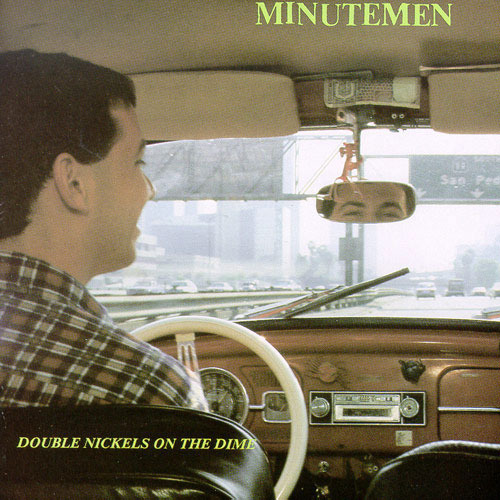
Here’s the song that inspired this playlist, a true origin story, which traces the band’s progress from playing in San Pedro through learning the art of punk rock from Joe Strummer, Richard Hell and John Doe to drinking and pogoing in Hollywood. All with D. Boon and Mike Watt playing the guitar. The genius of the song lies in its matter-of-fact nature. Their band really could be your life. All you need to do is find a good friend to hang out and make music with and don’t stop ‘til one of you dies. RIP D. Boon.
8). I Was Born a Unicorn — The UnicornsMixing the absurdist “Hey Hey We’re the Monkees”-vibe of “They Might Be Giants” with the “we’re normal guys” spirit of “History Lesson Part 2,” “I Was Born a Unicorn” is an energetic introduction to a weird-ass band. The Unicorns take their band name seriously, with references to Noah’s Ark and neighing sound effects. “I Was Born a Unicorn” is a perfect concert opener (or closer), with the triumphant final verse: “We’re The Unicorns!/We’re more than horses!/We’re the Unicorns and we’re people too!” I’ll take your word for it you crazy motherfuckers.
9). Born on the Bayou — Creedence Clearwater RevivalJohn Cameron Fogerty was born in Berkley, California. In case you don’t know your geography, that’s pretty fuckin’ far from the Bayou. But damn if he doesn’t make you believe he sprung from backwater Louisiana, chasing down hoodoos, whatever they are, every morning before wrestling some gators. Fogerty was inspired by Howlin’ Wolf and Muddy Waters to create a swampy aesthetic that has been imitated, but never quite been replicated. Fogerty says that “Born on the Bayou” is about a “mythical childhood and a heat-filled time” set in a place that he never lived, but a place with an essence that Fogerty would embody during his time as the brains and voice behind CCR.
8). I Was Born a Unicorn — The UnicornsMixing the absurdist “Hey Hey We’re the Monkees”-vibe of “They Might Be Giants” with the “we’re normal guys” spirit of “History Lesson Part 2,” “I Was Born a Unicorn” is an energetic introduction to a weird-ass band. The Unicorns take their band name seriously, with references to Noah’s Ark and neighing sound effects. “I Was Born a Unicorn” is a perfect concert opener (or closer), with the triumphant final verse: “We’re The Unicorns!/We’re more than horses!/We’re the Unicorns and we’re people too!” I’ll take your word for it you crazy motherfuckers.
9). Born on the Bayou — Creedence Clearwater RevivalJohn Cameron Fogerty was born in Berkley, California. In case you don’t know your geography, that’s pretty fuckin’ far from the Bayou. But damn if he doesn’t make you believe he sprung from backwater Louisiana, chasing down hoodoos, whatever they are, every morning before wrestling some gators. Fogerty was inspired by Howlin’ Wolf and Muddy Waters to create a swampy aesthetic that has been imitated, but never quite been replicated. Fogerty says that “Born on the Bayou” is about a “mythical childhood and a heat-filled time” set in a place that he never lived, but a place with an essence that Fogerty would embody during his time as the brains and voice behind CCR.
Origin Stories Mix
I recently contributed to the excellent Tumblr One Week One Mix with a playlist about musical origin stories. I've decided to repost what I wrote here. I hope you enjoy.
Every superhero needs an origin story. Sure, an audience willing to suspend disbelief about a man with the powers of a spider or a scientist who turns into giant green rage monster probably should not care too much about why these men can do these things, but what can you do? These origin stories help unravel the mystery surrounding the motivations of these people, why they are who they are and why they do what they do.
Looming equally large in popular mythology as superheroes are musicians, who seem to have superpowers of their own. Since we don’t really know too much about the lives of these musicians, people try to color in the lines, embellishing the details that we know. Did Robert Johnson really sell his soul to the Devil to become a great guitar player? Probably not, but it doesn’t matter because that’s the first thing anybody talks about whenever anyone brings him up in conversation.
The playlist I made for this week takes a listen to what happens when musicians create their own mythology, and how it colors the listener’s expectations of the artist. Some of these songs are not exactly origin stories in the strictest sense, but statements of purpose, an attempt to instill a message into a larger body of work. Or they could just be theme songs, rallying cries for the artist’s fans. I have used a lot of “brand names” in this playlist (particularly in Hip-Hop), because the type of artists that generate reverence and mythology are either popular or cult favorites.
Even though this is a concept playlist, it is still a collection of great songs that sound great together and I hope you enjoy listening as much as I have.
Every superhero needs an origin story. Sure, an audience willing to suspend disbelief about a man with the powers of a spider or a scientist who turns into giant green rage monster probably should not care too much about why these men can do these things, but what can you do? These origin stories help unravel the mystery surrounding the motivations of these people, why they are who they are and why they do what they do.
Looming equally large in popular mythology as superheroes are musicians, who seem to have superpowers of their own. Since we don’t really know too much about the lives of these musicians, people try to color in the lines, embellishing the details that we know. Did Robert Johnson really sell his soul to the Devil to become a great guitar player? Probably not, but it doesn’t matter because that’s the first thing anybody talks about whenever anyone brings him up in conversation.
The playlist I made for this week takes a listen to what happens when musicians create their own mythology, and how it colors the listener’s expectations of the artist. Some of these songs are not exactly origin stories in the strictest sense, but statements of purpose, an attempt to instill a message into a larger body of work. Or they could just be theme songs, rallying cries for the artist’s fans. I have used a lot of “brand names” in this playlist (particularly in Hip-Hop), because the type of artists that generate reverence and mythology are either popular or cult favorites.
Even though this is a concept playlist, it is still a collection of great songs that sound great together and I hope you enjoy listening as much as I have.
Subscribe to:
Posts (Atom)
+-+FLAC.jpg)